


Page Contents
A mid-sized creative agency recently shared a common frustration: they had successfully integrated high-end generative models into their brainstorming phase, but the final delivery pipeline was a mess. They could generate a hundred stunning concepts in an hour, yet it took three days to get one image to a state where a client would actually sign off on it. The "prompt-and-pray" method, while exhilarating for mood boards, creates a massive bottleneck when specific brand standards enter the room.
The industry is currently hitting a "generative noise floor." We're saturated with high-fidelity imagery that lacks intentionality. For content teams, the challenge has shifted from "how do we make this?" to "how do we make this usable?" Moving from experimental one-offs to a standardized production pipeline needs a shift in perspective: seeing generative output not as a finished product. As raw material that needs a specialized post-production layer.
The Generative Noise Floor: Why 'Good Enough' is Failing Teams
The hidden cost of modern generative workflows is the time spent chasing the "perfect" prompt. In a high-stakes marketing environment, the difference between a 90% successful generation and a 100% brand-ready asset is usually several hours of manual labor or dozens of discarded compute credits. When a team relies solely on raw output, they often encounter the "uncanny" problem-minor lighting inconsistencies, strange artifacts in the background, or characters that almost. Don't quite, look like the intended persona.
This disconnect is particularly visible when attempting to maintain a visual language across multiple platforms. A prompt that works for a hero image on a landing page might fail to produce a matching social tile with the same atmospheric depth. The result is a fragmented brand presence that feels "generated" rather than designed. To solve this, operational leads are beginning to treat AI generators as the starting block, not the finish line. They're building workflows where the initial generation provides the composition, but a dedicated refinement stage handles the technical fidelity.

Read also: Cyberbullying: Tips For Teens And Parents To Deal With It
Bridging the Gap with a Dedicated Post-Production Layer
The bottleneck in creative operations isn't the speed of creation; it's the speed of validation and correction. If a designer has to spend forty minutes in a legacy editor manually masking out a hallucinated sixth finger or a blurry background object, the time-saving benefits of AI are largely neutralized. This is where a professionalAI Photo EditorBecomes the central gatekeeper for quality.
Instead of regenerating an image forty times with different seeds-a process that's both costly and unpredictable-teams are finding higher ROI in "surgical" editing. If the lighting on a subject's face is perfect but the background includes a distracting, nonsensical structure, it's far more efficient to remove that specific element than to hope the model gets it right on the next spin. This shift from "creative generation" to "creative correction" allows teams to keep the parts of the AI output that work while discarding the hallucinations that signal a lack of professional oversight.
The Three-Step Refinement Protocol for Modern Workflows
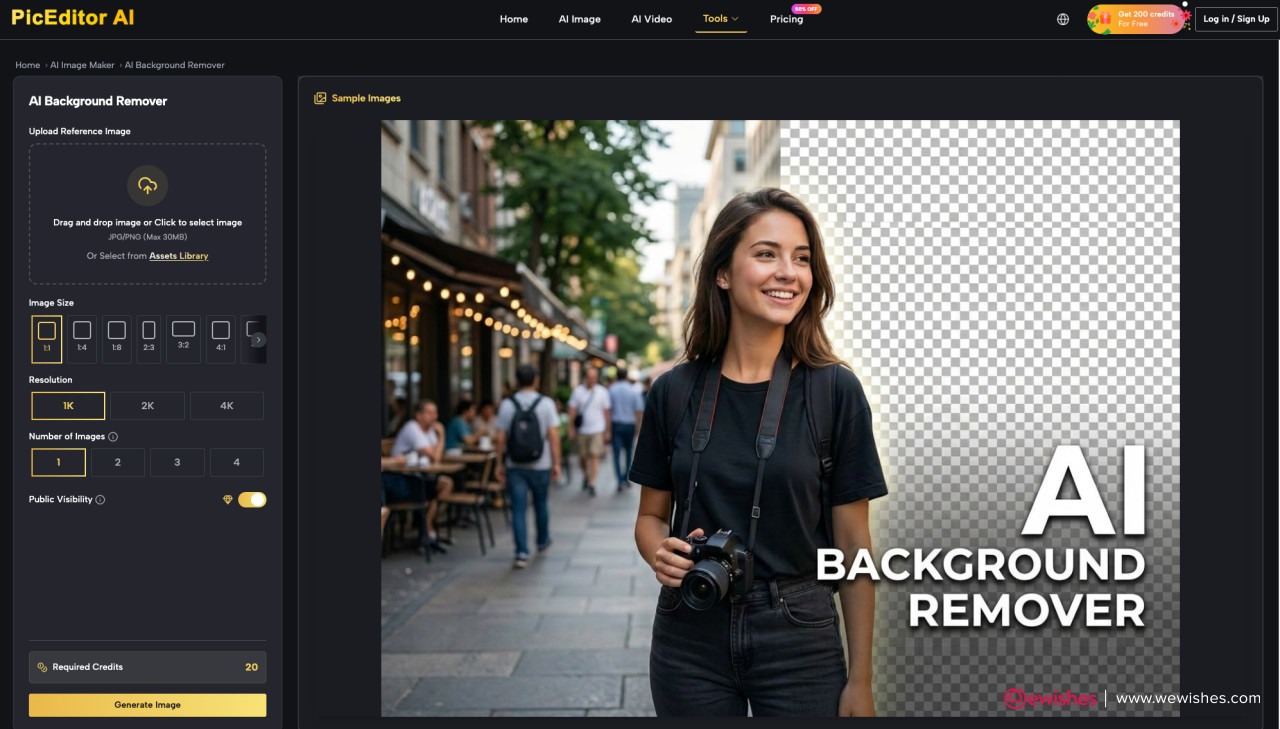
To move beyond the chaos of raw prompting, content teams are adopting structured protocols that treat every asset with the same rigor as a traditional photo shoot. Using a centralized platform like AI Photo Editor allows these teams to standardize their output across different models, such as Flux or Nano Banana, without losing their aesthetic north star.
Step 1: Structural Correction
The first pass is always about removing the "noise" of generative AI. Models, even top-tier ones, frequently hallucinate unnecessary details in the periphery of a shot. Using tools like an Object Eraser, editors can quickly clean up the composition. This isn't just about fixing errors; it's about art direction. An editor might decide that a generated street scene is too cluttered for a specific ad layout and strip away cars or pedestrians to create better "copy space." This level of control is rarely achievable through prompting alone without compromising the central subject.
Read also: A Better Way to Revise Lyrics: Listen Before You Rewrite Everything
Step 2: Fidelity and Persona Enhancement
Consistency is the ultimate goal for any campaign. If you're using generative media to represent a recurring character or a specific product, the "face swap" and upscaling capabilities of a modernPic editor AIAre non-negotiable. Upscaling isn't just about increasing pixel count; it's about restoring the micro-textures that models often smooth out-skin pores, fabric weaves, and sharp edges on metallic surfaces. This step ensures that an image looks as good on a billboard as it does on a mobile screen, removing the "plastic" sheen often associated with mid-range AI outputs.
Step 3: Ecosystem Consolidation
The final step in a mature workflow is reducing tool-switching friction. A team shouldn't have to jump between one site for a Flux generation, another for a Kling video animation, and a third for final retouching. Platforms like PicEditor AI serve as a hub where these disparate capabilities-text-to-image, image-to-video, and granular editing-live under one roof. When the person responsible for the final polish has direct access to the underlying models (like Seedream or Google Veo), the feedback loop between "correction" and "regeneration" becomes almost instantaneous.
The Consistency Fallacy: Where Generative Tools Still Struggle
Despite the rapid advancement of these technologies, there are significant areas where teams must remain cautious. It's a mistake to assume that even the most advanced AI Photo Editor can solve every creative problem.
One primary limitation is brand-accurate color fidelity. While AI can handle "warm" or "cinematic" lighting with ease, it still struggles to hit specific brand hex codes or Pantone matches with absolute precision within the generative process. If a brand's identity relies on a very specific shade of teal, a human-in-the-loop is still needed to verify those values in a calibrated environment. AI models "think" for aesthetic probability, not brand manuals.
Read also: Three Moodboard Rounds Beat Endless Image Prompting
Also, there's a persistent uncertainty regarding complex spatial relationships. If an image needs a character to hold a very specific tool in a non-standard way, the AI will often fail the physics test. It can't yet reliably interpret the mechanical logic of how objects work in the real world. In these instances, the editor's role isn't just to "fix" the image. To decide when an AI-generated asset is a lost cause that needs a traditional composite or a different creative approach entirely. We must reset the expectation that AI is a "magic button" for every use case; it's a highly sophisticated brush. The hand holding it must still understand the rules of the canvas.
Auditing Your Pipeline for Long-Term Scalability
As teams look toward the next year of production, the focus must shift from acquiring the "best" model to building the most resilient pipeline. The cost-benefit analysis for high-volume agencies is no longer about per-generation token costs. About "time-to-ready." How long does it take for a raw prompt to become a client-ready file?
A centralized workflow that integrates both stills and video (using models like Wan or Seedance) ensures that the visual DNA of a campaign remains intact as it moves across formats. When you can animate a static image that you've already polished in your AI Photo Editor, you eliminate the risk of the video model "re-interpreting" the character's features or the environment's lighting.
Ultimately, the goal of operationalizing these tools is to give the creative lead their time back. By establishing a professional post-production layer, teams stop fighting the models and start directing them. The focus returns to narrative weight and compositional balance-the things that actually move the needle for an audience-rather than the technical struggle of managing generative artifacts. In this new era of production, the winner isn't the team with the best prompts; it's the team with the best editing workflow.








Comments
No comments yet — be the first to share your thoughts.