

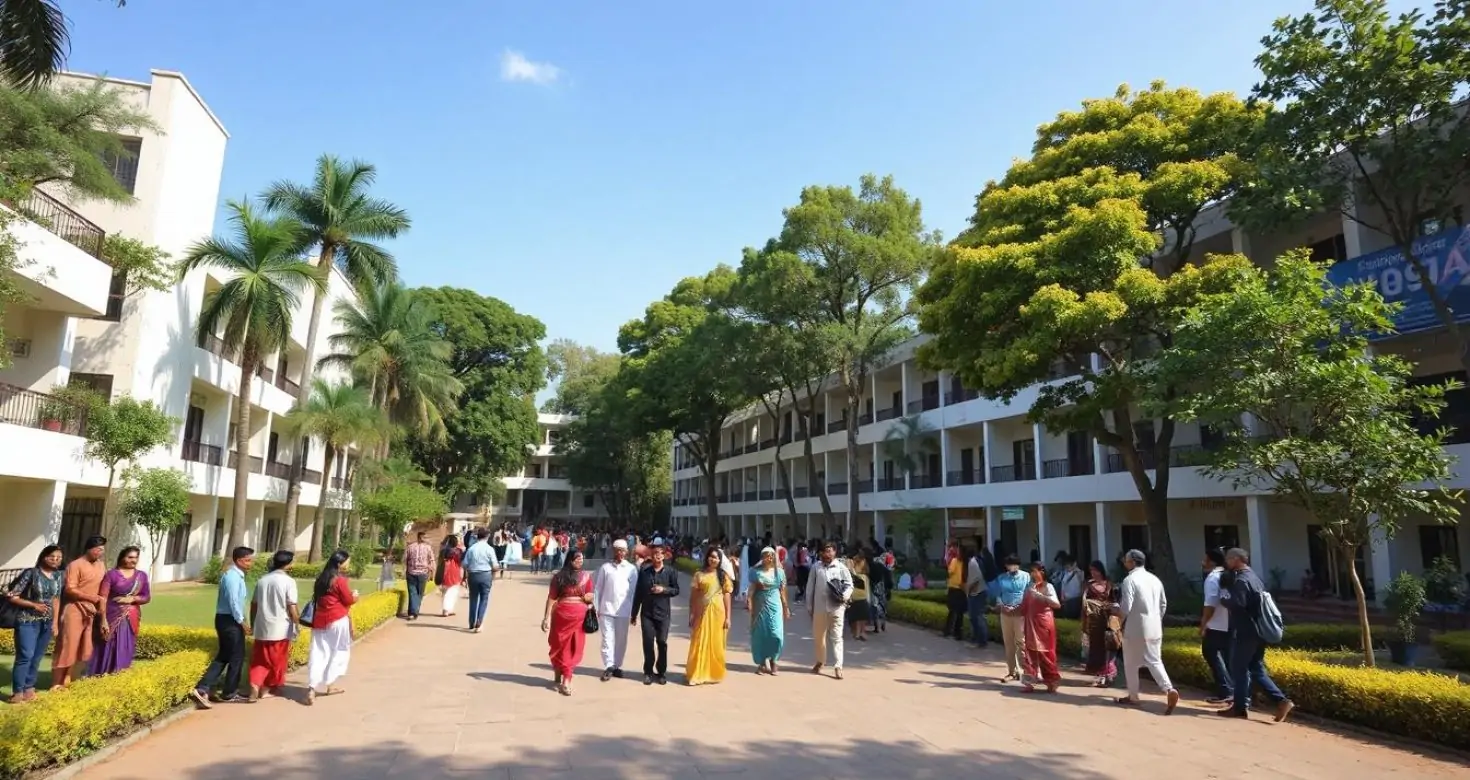
For many students, university is about much more than lectures. It's where you build friendships, find out what you're good at, meet future colleagues and try things you've never tried. Indian campuses mix academic rigour with a lively culture of festivals, clubs and traditions, and each one feels quite different.
Here's a look at what makes some well-known campuses distinctive, and what to consider when comparing them.
Read also: How to earn a Leading SAFe Certification?
IIT Bombay: academics plus a busy campus culture
IIT Bombay, set in Mumbai's Powai area, is known for demanding academics and a very active student life. Students join technical and cultural clubs, run large annual festivals, and compete in sports and design projects. Hostel life is central to the experience, with strong ties between students who live and study together.
Read also: Pre-School Maths: Why Early Maths Learning Is Worth Your Time
It's one of the most sought-after destinations for engineering aspirants, and you can see the range of programmes in this list of highly sought-after IIT Bombay courses.
- Strengths: strong peer group, research opportunities, large alumni network.
- Things to expect: heavy workload and competitive atmosphere.
UPES Dehradun: a scenic campus with an industry focus
UPES (University of Petroleum and Energy Studies) sits in the foothills near Dehradun. It's known for programmes linked to energy, engineering, law, design and business, with an emphasis on industry connections, internships and projects. The setting, with hills and greenery, gives the campus a very different feel from a big-city university.
Read also: Why Choose Data Science Training In Bangalore?
You can explore the wide range of UPES courses available to see how its programmes are organised.
- Strengths: industry-linked curriculum, modern facilities, residential campus.
- Things to expect: being further from a major metro, which suits some students and not others.
Other campus experiences
India has many distinctive campuses, each with its own culture:
- Large central universities with huge student bodies, debating societies and strong arts traditions.
- Liberal arts and private universities with small classes and flexible curricula.
- Technical institutes outside big cities where the campus is a small town of its own.
- City colleges where students live at home and balance college with city life.
What defines campus life
| Part of campus life | What it adds |
|---|---|
| Clubs and societies | Skills, friends and a chance to lead |
| Fests and events | Culture, networking and memories |
| Hostels and residential life | Independence and lifelong friendships |
| Sports and fitness | Balance, teamwork and health |
| Internships and placements | Real-world experience and job opportunities |
How to choose the right campus for you
- Start with the course. Strong academics in your field come first.
- Visit if you can, or attend an online open day and talk to current students.
- Think about environment: big city or quiet campus, large or small cohort.
- Check costs including fees, hostel, travel and living expenses.
- Look at outcomes: placements, internships and alumni stories.
The best campus isn't the one with the best name, but the one where you'll learn well, feel supported and enjoy the four years you'll spend there.











Comments
No comments yet — be the first to share your thoughts.